Berry Smile: A Friendly Handwritten Display Font for Digital Brands
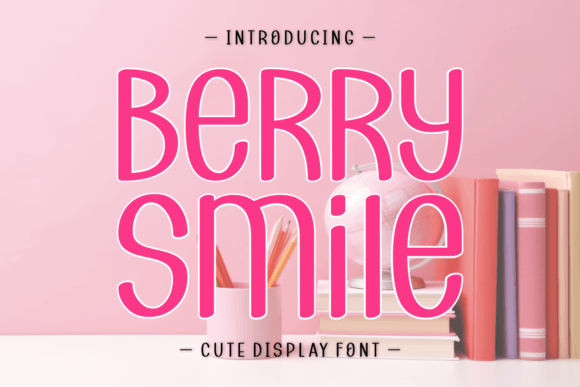
As a UI designer who ships landing pages, SaaS dashboards, and boutique e-commerce sites, I reach for display fonts not just for flair—but for function. Berry Smile stands out because it delivers warmth without sacrificing clarity. It’s a sweet, friendly handwritten display font with natural rhythm, subtle irregularities, and gentle contrast—designed to feel human, not algorithmic. Its curves are soft but intentional; its spacing is open enough for screen legibility; and its personality lands somewhere between approachable and authentically creative.
In practice, Berry Smile excels where tone matters most: hero section headlines, brand taglines, course title cards, newsletter headers, and CTA buttons on conversion-focused layouts. It’s not built for long paragraphs or dense interface labels—that’s where your clean sans serif body font earns its keep. But as a display font, Berry Smile commands attention while inviting trust. Users don’t just read the words—they register the feeling behind them. That emotional resonance strengthens brand identity before a single feature is explained.
On responsive layouts, Berry Smile performs best at larger sizes: 32px and up on desktop, 28px minimum on mobile. It holds up well over light and dark backgrounds alike—especially when paired with generous letter-spacing (0.5–1.2px) and sufficient line-height in hero sections. Avoid using it below 20px or in tight button labels; its handwritten charm blurs at small scale. For image overlays, place it over solid-color masks or high-contrast zones—not busy photos—so the delicate strokes remain legible and scannable.
Visual hierarchy benefits directly from Berry Smile’s distinct voice. When layered above a neutral sans serif like Inter, Poppins, or Manrope, it creates instant contrast that guides the eye naturally: headline → subhead → body → action. That rhythm supports faster scanning and improves comprehension—critical for landing pages where users decide in under three seconds whether to stay or scroll away. In online stores, Berry Smile on product banners or limited-time offer badges adds urgency and charm without shouting. For coaching or creative service sites, it signals empathy and individuality—qualities clients actively seek in digital first impressions.
Think of real use cases: a pottery studio’s homepage banner reading “Handmade With Care” in Berry Smile, paired with Roboto for pricing and shipping details; a mindfulness app’s onboarding screen with “Breathe In. Begin.” as the headline, then crisp system text for instructions; or a digital course sales page where “Your Creative Breakthrough Starts Here” anchors the top fold—immediately communicating warmth and possibility. Even in portfolio sites, Berry Smile works beautifully for project titles or client quotes—adding character without competing with visual work.
Font pairing is where Berry Smile shines brightest. As a script-style display font, it needs grounded, highly legible companions. For web interfaces and modern digital products, pair it with a versatile, variable sans serif (e.g., Inter, Space Grotesk, or IBM Plex Sans). These provide neutrality, scalability, and accessibility compliance—while Berry Smile brings voice. For editorial or brand-forward sites—think newsletters, creative agencies, or indie publishers—a restrained serif like Literata or Cormorant Garamond can deepen sophistication without clashing. Never pair Berry Smile with another decorative or script font; contrast in function, not flourish, is key.
Technically, Berry Smile arrives as a premium font with standard OpenType features, including ligatures and stylistic alternates that add nuance to repeated characters. It supports Latin-based languages and includes webfont formats (WOFF2, WOFF) optimized for fast loading—critical for Core Web Vitals. Check the package for available weights: most display fonts like this ship with one primary weight, so plan hierarchy around size, spacing, and color—not boldness. If your project requires bold variants or italics, confirm availability before licensing.
Licensing is non-negotiable in professional web design. Berry Smile is a commercial font—meaning you must purchase a license that explicitly covers web use, including self-hosted sites, client projects, SaaS platforms, online stores, and digital templates. Free alternatives rarely offer the same craftsmanship, spacing control, or multilingual support—and often lack proper hinting for crisp rendering across devices. A properly licensed display font like Berry Smile becomes part of your reusable design system, reinforcing consistent tone across every touchpoint: website headers, email subject lines, social media banners, and even PDF pitch decks.
It’s also worth noting what Berry Smile isn’t—and why that matters. It’s not a serif font. It’s not a monospace or geometric sans. It’s not meant for data tables, form fields, or navigation menus. Its strength lies in intentionality: using it only where personality amplifies purpose. Overuse dilutes impact; strategic placement builds recognition. That discipline—choosing the right tool for the emotional job—is what separates polished digital experiences from generic ones.
For designers building brands that value authenticity over automation, Berry Smile offers more than aesthetics. It’s a tool for signaling care in micro-interactions, adding sincerity to marketing copy, and grounding digital experiences in human warmth. When your audience sees “Welcome Back” or “You’ve Got This” set in Berry Smile, they’re not just reading words—they’re sensing intention. And in today’s crowded digital landscape, that subtle difference often determines whether a visitor becomes a customer, a subscriber, or a loyal advocate.
- Use Berry Smile for hero headlines, section titles, and short branded phrases
- Avoid it for body copy, small UI labels, or low-resolution contexts
- Always pair it with a highly legible sans serif or serif for balance
- Test readability on mobile with real content—not placeholder lorem
- Verify webfont licensing covers your deployment scope before launch